In today’s fast-paced world, juggling work, family, and social commitments can make maintaining a healthy lifestyle feel overwhelming. Many of us face the challenge of eating nutritious meals while navigating busy schedules. However, with strategic meal prep, you can streamline your cooking process and ensure you have healthy meals ready to go, even on the busiest days. This guide will provide practical meal prep ideas tailored for a healthy lifestyle, making it easier to stay on track with your nutrition goals.
Understanding Strategic Meal Prep
Before diving into the specifics, it’s essential to understand what strategic meal prep entails. At its core, meal prep is about preparing meals and snacks in advance to save time and reduce stress during the week. This approach not only helps you eat healthier but also minimizes the temptation to opt for fast food or unhealthy snacks when you’re pressed for time.
Strategic meal prep goes beyond just cooking in advance; it focuses on intentional planning. This strategy involves considering your nutritional needs, personal preferences, and lifestyle to create a meal prep system that works effectively for you. By being deliberate about what you prepare, you can ensure that your meals are not only healthy but also enjoyable.
The Benefits of Meal Prep
Meal prepping offers numerous benefits that can significantly enhance your daily routine. One of the primary advantages is time savings. By dedicating just a few hours on the weekend or during your free time, you can prepare multiple meals that will last throughout the week. This approach eliminates the daily decision-making process about what to eat, allowing you to focus on other priorities.
Another key benefit of meal prep is better portion control. When you prepare meals in advance, you can control the ingredients and portions, which is especially helpful if you’re trying to manage your weight. Studies show that individuals who practice meal prep are more likely to consume fewer calories and make healthier food choices. A study conducted by the American Journal of Preventive Medicine found that meal prepping is associated with healthier eating habits and lower body mass index (BMI).
Getting Started with Strategic Meal Prep
Assess Your Lifestyle and Needs
The first step in effective meal prep is to assess your lifestyle and nutritional needs. Consider your schedule for the week ahead. Are there days when you’ll be busier than usual? Are there specific meals you want to focus on, such as breakfast, lunch, or dinner? By understanding your week, you can create a meal prep plan that fits seamlessly into your routine.
For instance, if you know that Tuesdays are particularly busy, you might want to prepare extra meals on Sunday to cover that day. Alternatively, if you have a lighter schedule on Wednesdays, you can plan to cook a fresh meal then. This flexibility helps ensure that you always have nutritious options available, regardless of your daily commitments.
Create a Weekly Menu
Once you have a sense of your schedule, the next step is to create a weekly menu. This menu should include the meals you want to prepare, taking into account any dietary preferences or restrictions. Consider incorporating a variety of proteins, grains, and vegetables to keep your meals interesting and nutritious.
For example, a simple weekly menu might include:
-
Breakfast: Overnight oats with fruits, smoothies, and egg muffins.
-
Lunch: Quinoa salad with chickpeas, grilled chicken wraps, or vegetable stir-fry.
-
Dinner: Baked salmon with asparagus, vegetable curry, or turkey meatballs with spaghetti squash.
By planning your meals in advance, you can ensure that you have all the ingredients on hand when it’s time to cook. This step reduces the likelihood of last-minute takeout orders, making it easier to stick to your healthy eating goals.
Meal Prep Strategies
Batch Cooking
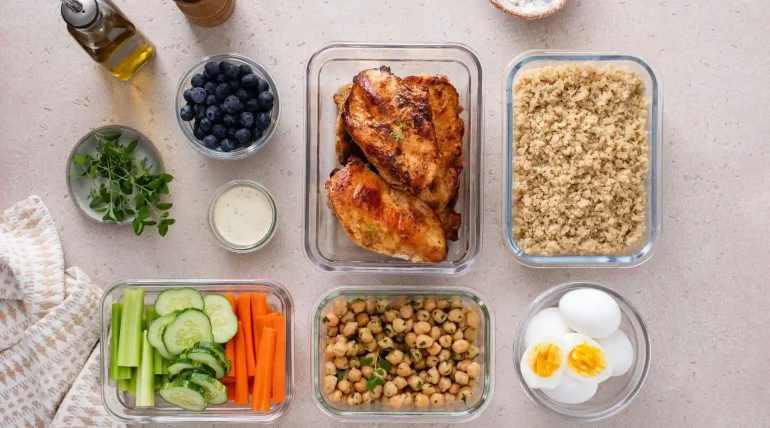
Batch cooking is one of the most effective meal prep strategies. This method involves preparing large quantities of food at once, which can then be portioned out for the week. For example, you might cook a big batch of brown rice, roast several trays of vegetables, and grill chicken breasts all in one go. This way, you have the base components ready to mix and match throughout the week.
When batch cooking, consider using versatile ingredients that can be used in multiple dishes. For instance, roasted sweet potatoes can be added to salads, served as a side dish, or blended into a smoothie for a nutritious boost.
One-Pan Meals
Another time-efficient strategy is preparing one-pan meals. These meals require minimal cleanup and can be packed with nutrients, making them ideal for busy lifestyles. For example, a sheet pan dinner might include chicken thighs, broccoli, and carrots, all roasted together with olive oil and your favorite spices.
One-pan meals not only save time but also allow for easy portion control. You can cook enough for several days and simply reheat portions as needed. Plus, the flavors blend beautifully when cooked together, creating delicious meals with minimal effort.
Freezing Meals
Freezing meals is an excellent way to ensure you have healthy options on hand for days when cooking feels impossible. Prepare larger batches of soups, stews, or casseroles and freeze them in individual portions. This way, you can simply pull out a meal from the freezer and heat it up whenever you need a quick dinner.
When freezing meals, be sure to label containers with the contents and date. This practice helps you keep track of what you have on hand and ensures that nothing goes to waste. Additionally, consider investing in high-quality freezer bags or containers to maintain the freshness of your meals.
Real-Life Examples of Strategic Meal Prep
Case Study: Sarah’s Journey
To illustrate the effectiveness of strategic meal prep, let’s look at Sarah, a busy working mom of two. With a full-time job and family obligations, Sarah often found herself resorting to takeout or unhealthy snacks. Determined to make a change, she decided to implement meal prep into her routine.
Sarah began by assessing her family’s needs and creating a weekly menu. She incorporated a variety of meals that her children enjoyed, such as homemade tacos, pasta dishes, and colorful veggie bowls. On Sundays, she would spend a couple of hours batch cooking and prepping snacks for the week.
The results were transformative. Sarah reported feeling more energized and focused throughout her days. Her family embraced the healthier meals, and she discovered that meal prep not only saved time but also brought the family together during cooking sessions. By sharing this experience, Sarah highlighted how strategic meal prep can positively impact both health and family dynamics.
Expert Insights
To further validate the benefits of meal prep, we can refer to nutritionist and meal prep expert, Jessica Smith. In her practice, she emphasizes the importance of planning meals around individual lifestyles. According to Smith, “Meal prep is not a one-size-fits-all solution. It’s about finding what works for you and your schedule. The key is to start small and gradually build your routine.”
Smith also suggests incorporating seasonal ingredients into meal prep. “Using fresh, in-season produce not only enhances the flavor of your meals but also ensures you’re getting the most nutrients possible,” she explains. By following expert advice and tailoring meal prep to your unique needs, you can create a sustainable and enjoyable eating habit.
Overcoming Common Meal Prep Challenges
Despite the many benefits of meal prep, some challenges can arise. Here are a few common obstacles and how to overcome them.
Lack of Time
One of the biggest barriers to meal prep is the perceived lack of time. To combat this, start small. Instead of planning an entire week’s worth of meals right away, focus on just two or three meals to prepare in advance. As you become more comfortable with the process, you can gradually increase the number of meals you prep.
Conclusion
Strategic meal prep is a powerful tool for maintaining a healthy lifestyle amidst a busy schedule. By planning your meals, batch cooking, and utilizing freezing techniques, you can ensure that nutritious options are readily available throughout the week. The benefits of meal prep extend beyond convenience; they include improved health, cost savings, and enhanced family connections.
By assessing your lifestyle, creating a weekly menu, and implementing effective meal prep strategies, you can transform your eating habits. Remember, the key is to start small and find what works best for you. With determination and a little creativity, you can embrace strategic meal prep as a sustainable approach to healthy eating.
FAQs
What are some easy meal prep ideas for beginners?
Start with simple recipes like overnight oats for breakfast, quinoa salads for lunch, and sheet pan dinners for dinner. These meals are easy to prepare and store.
How can I keep my meal prep interesting?
Incorporate different cuisines, use seasonal ingredients, and experiment with herbs and spices. Vary your recipes weekly to avoid monotony.
Can meal prep help with weight loss?
Yes, meal prep can promote weight loss by providing portion-controlled meals and reducing the temptation to eat unhealthy foods when you’re busy.